
Tentang Semua Tur Tur BecakTur SepedaTur Arashiyama Bamboo Grove dan Monkey Park Petunjuk Arah Jam Operasional & Biaya
Cari Tur 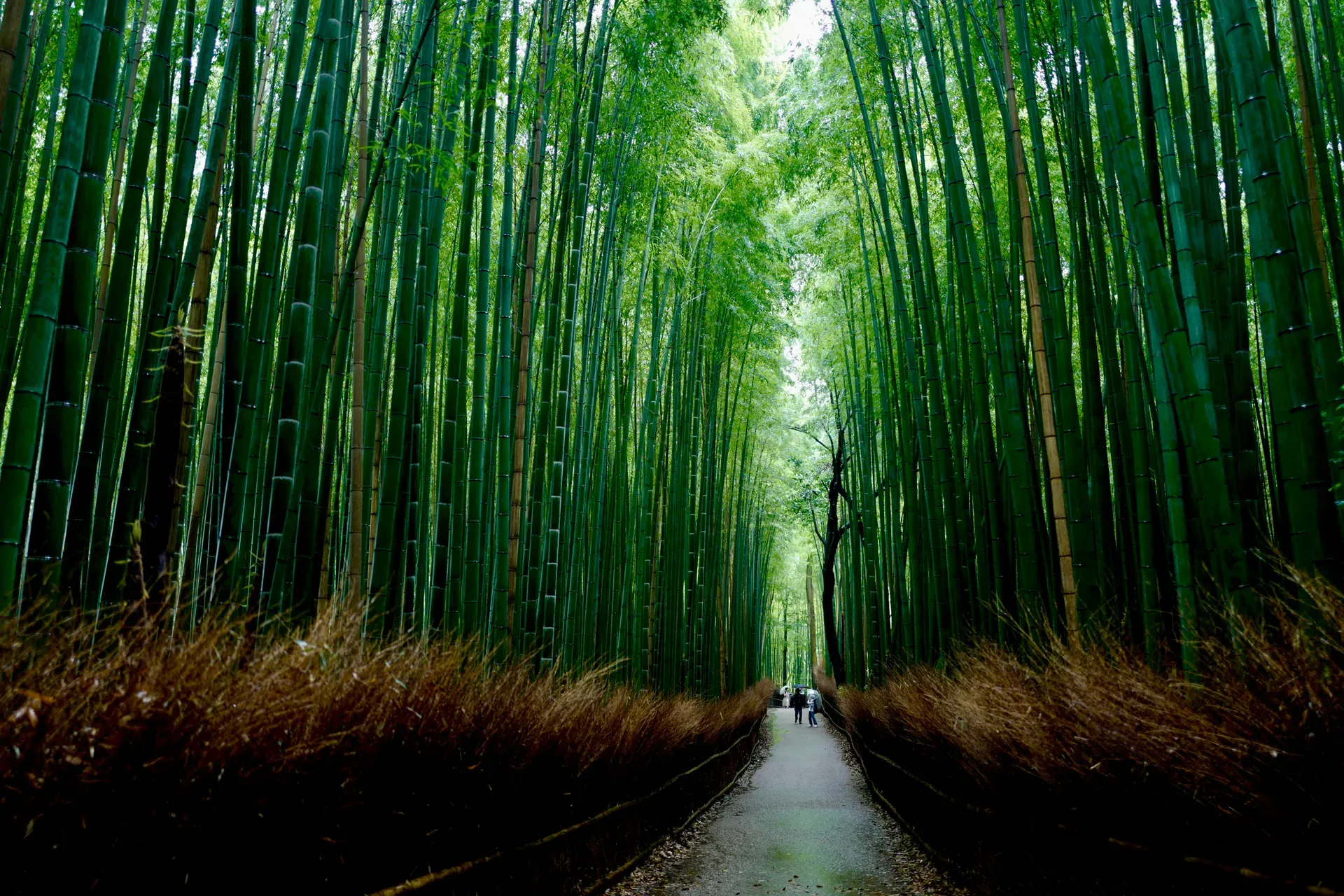
Ten thousand Moso bamboo stalks rise 25 meters above a 400-meter paved path in western Kyoto. Wind passing through the dense green canopy creates a distinct creaking sound recognized officially as one of Japan's 100 Soundscapes.
Ten thousand Moso bamboo stalks form a dense, 25-meter-high canopy over a 400-meter pedestrian path in the Ukyo Ward of western Kyoto. Visitors walk through a green tunnel where sunlight filters through the leaves in dappled patterns known as komorebi. The grove sits at the base of the Arashiyama mountains, sharing a border with the 14th-century Tenryu-ji Temple. Wind pushes against the upper foliage, causing the thick trunks to sway and knock together. This hollow, wooden echoing earned the forest a spot on the Ministry of the Environment's '100 Soundscapes of Japan' list in 1996. The paved trail begins relatively flat near the Nonomiya Shrine and slopes upward toward the Okochi Sanso Villa at the western edge.
Seasonal changes drastically alter the environment. May and June produce the brightest green stalks as new shoots mature. Late March brings cherry blossoms to the surrounding 16-square-kilometer district, while mid-November turns the adjacent mountain slopes red and gold. The temperature drops noticeably upon entering the dense canopy, providing a slight reprieve from the intense Kyoto heat. Summer still introduces high humidity and aggressive mosquitoes, requiring strong repellent.
Heavy foot traffic defines the modern experience during peak months. Thousands of people pass through daily, filling the narrow three-meter-wide path. Tripod photography and selfie sticks become useless in these conditions. Arriving before 8:00 AM or after 6:00 PM provides the only reliable window to walk the 400-meter stretch without navigating shoulder-to-shoulder crowds. Entering through the North Gate of Tenryu-ji Temple allows visitors to bypass the congested main street entirely. The total walking distance from the nearest train station and through the grove exceeds two kilometers, requiring sturdy footwear. Combining the walk with a ride on the Sagano Scenic Railway requires navigating to the Torokko Arashiyama Station located just past the western exit of the forest.
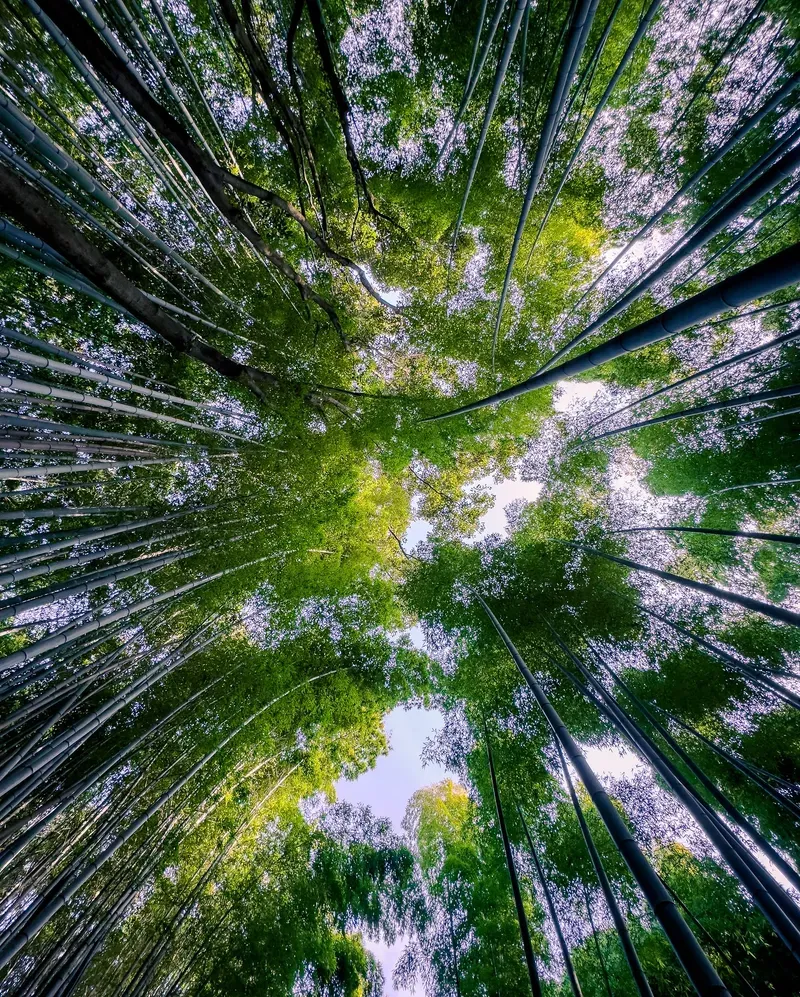
Japanese aristocrats claimed the Arashiyama district as a seasonal retreat during the Heian Period (794–1185). The nobility built villas along the Katsura River, drawn by the shifting colors of the surrounding mountains. Courtiers spent their days boating, viewing the autumn moon, and wandering through the wild bamboo that grew naturally in the region. This native flora provided a steady supply of flexible wood for local craftsmen who wove baskets, carved cups, and built fencing for the estates.
Shogun Ashikaga Takauji established Tenryu-ji Temple in 1339 to appease the spirit of Emperor Go-Daigo. The temple grounds originally encompassed the entire bamboo forest. Monks maintained the groves, using the fast-growing stalks for structural repairs, garden implements, and daily tools. Fire destroyed the main temple buildings eight times over the next five centuries, with major blazes occurring during the Onin War in 1467 and the Kinmon Incident of 1864. The bamboo forest survived these conflagrations and regenerated continuously from its protected underground root system.
Urban development threatened the western outskirts of Kyoto following World War II. Housing projects and commercial zoning crept toward the Arashiyama mountains as the city rapidly expanded. The local government intervened in 1967, designating the remaining bamboo forest as a protected historical landscape. This legal shield stopped construction and preserved the 400-meter corridor that exists today.
Tourism replaced agriculture and craftsmanship as the primary function of the grove in the late 20th century. The city paved the main pedestrian artery to accommodate increasing foot traffic. Maintenance crews now selectively harvest older stalks to ensure sunlight reaches the new shoots, preventing the forest from suffocating itself. The rise of digital photography in the 2010s transformed the site into an international landmark, leading to severe overcrowding. Visitors accessing the grove from the JR Saga-Arashiyama Station walk 10 minutes through residential streets before reaching the protected zone. The Keifuku Arashiyama Main Line offers a slightly shorter approach, dropping passengers just five minutes from the eastern entrance.
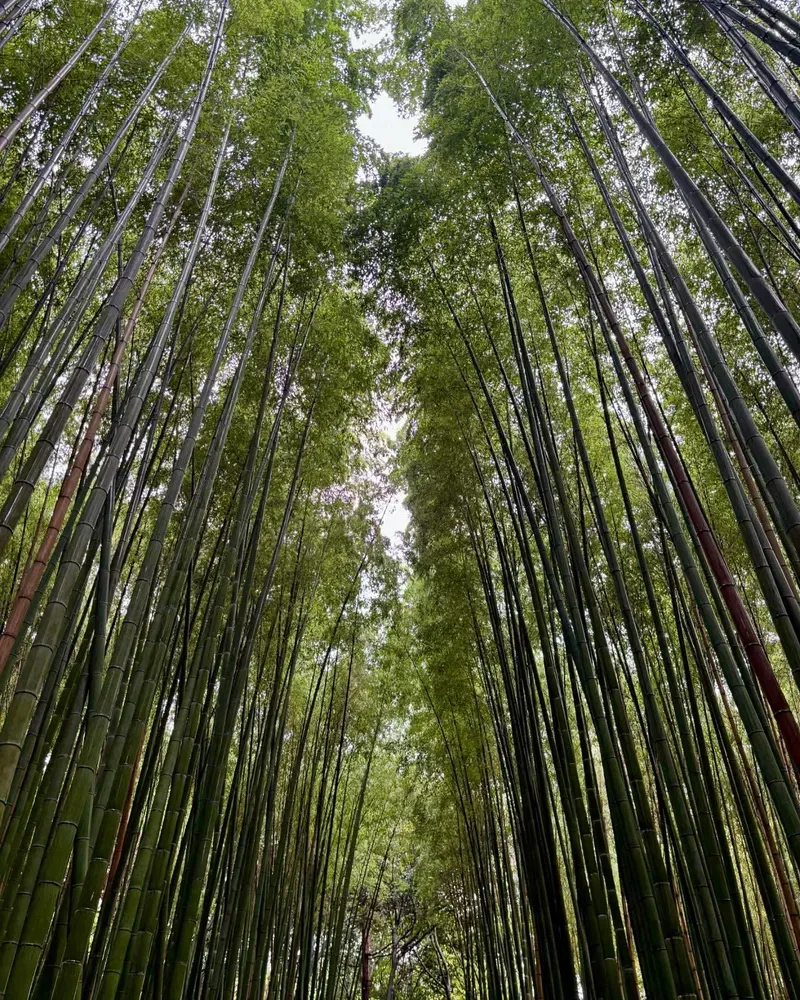
Moso bamboo (Phyllostachys edulis) dominates the Arashiyama grove. These giant grasses sprout from an interconnected underground rhizome system, meaning the entire forest functions as a single living organism. New shoots emerge in spring and can grow up to a meter per day, reaching their maximum height of 25 to 30 meters in just a few weeks. The mature stalks measure roughly 20 centimeters in diameter at the base and taper as they rise toward the sky. The sheer density of the stalks blocks out a significant portion of direct sunlight, creating a permanent twilight effect at ground level.
The main pedestrian artery stretches 400 meters long and averages three meters wide. Asphalt covers the ground, allowing smooth access for wheelchairs and strollers. Traditional brushwood fences, bound with black twine, separate the public walkway from the living bamboo. These low barriers, constructed from dried bamboo branches, protect the shallow root systems from being trampled by the daily influx of tourists. The fencing design reflects traditional Kyoto landscaping techniques used in the adjacent temple gardens.
Topography shifts as visitors move west. The eastern entrance near the main street sits on flat ground. Past the Nonomiya Shrine, the path begins a gradual incline toward the Okochi Sanso Villa. Manual wheelchair users often need assistance on this final 100-meter stretch due to the steep grade. The forest lacks artificial lighting, plunging the path into near-total darkness after sunset. Walking through the grove at night requires a strong flashlight to avoid tripping on the sloping asphalt. Occasional rickshaws and delivery bicycles share the narrow path with pedestrians. Stepping to the sides of the asphalt prevents collisions with these fast-moving vehicles. Private dirt paths branch off from the main artery, reserved exclusively for the traditional pulled rickshaws operating out of the main street.
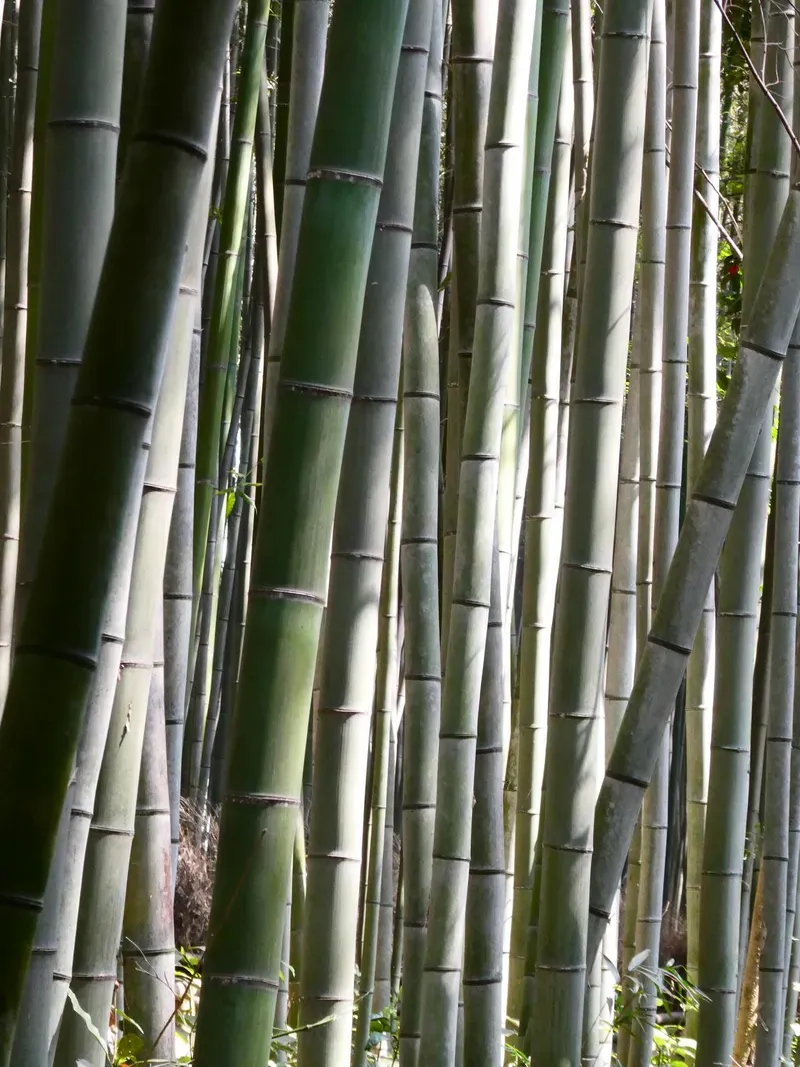
Bamboo represents strength, flexibility, and rapid growth in Japanese culture. The plant bends under the weight of winter snow without breaking, a physical trait that inspired centuries of poetry, ink wash painting, and architectural design. Arashiyama's preserved stalks provide a living link to the traditional Sagano landscape, an aesthetic standard established by Heian-era nobility over a millennium ago.
Nonomiya Shrine sits directly inside the forest. This small Shinto sanctuary features a rare black torii gate made from unpeeled oak wood, contrasting sharply with the bright vermilion gates found elsewhere in Kyoto. Unmarried imperial princesses once spent a year purifying themselves at this exact spot before traveling to the Grand Shrine of Ise to serve as priestesses. The shrine appears in the classic 11th-century novel The Tale of Genji, cementing its place in Japanese literary history. Today, visitors stop at the shrine to write wishes on wooden ema plaques, hoping for academic success or a favorable marriage.
The grove operates as an active conservation site rather than a static museum piece. Local artisans still harvest a strictly controlled number of mature stalks each winter. This selective culling maintains the health of the rhizome network and supplies raw material for traditional Kyoto crafts. Workshops in the surrounding district transform these harvested stalks into chasen tea whisks, woven baskets, and decorative cups. Vandalism disrupts this delicate agricultural cycle. Carving names into the green bark permanently damages the stalk, exposing the interior to rot and insects. Groundskeepers must cut down the defaced bamboo entirely to prevent disease from spreading through the interconnected root system.
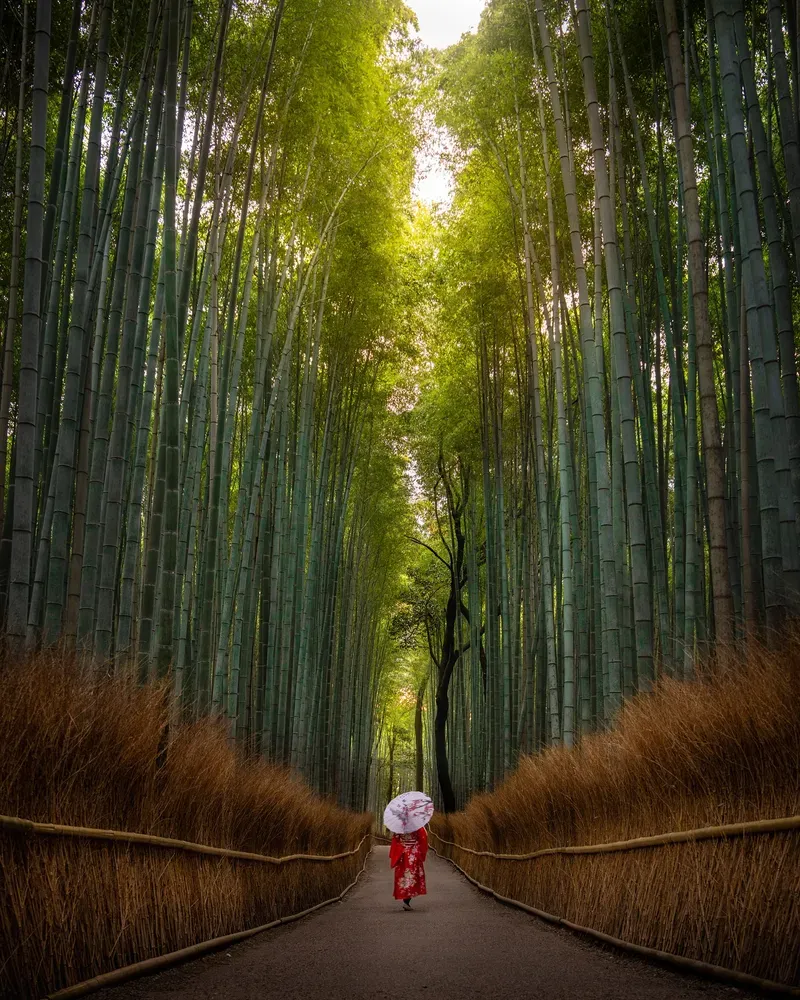
Seluruh hutan bambu Moso terhubung melalui sistem akar bawah tanah yang masif, menjadikannya secara fungsional sebagai satu organisme hidup.
Kuil Nonomiya di dalam hutan ini memiliki gerbang torii hitam langka yang terbuat dari kayu ek yang tidak dikupas.
Ujung barat jalan setapak berakhir di Okochi Sanso, bekas perkebunan seluas 20.000 meter persegi milik bintang film samurai tahun 1920-an.
Tunas bambu Moso di hutan ini dapat tumbuh hingga satu meter per hari selama musim semi.
Tim pemeliharaan secara selektif menebang batang yang lebih tua setiap musim dingin agar sinar matahari dapat mencapai tunas musim semi yang baru.
Menerbangkan drone melalui kanopi dilarang keras tanpa izin komersial karena tingginya lalu lintas pejalan kaki.
Hutan ini tidak memiliki lampu jalan dan menjadi gelap gulita segera setelah matahari terbenam, kecuali selama festival Hanatoro yang singkat.
Tidak, hutan bambu ini sepenuhnya gratis untuk dimasuki. Anda dapat berjalan di jalur utama umum tanpa perlu membeli tiket.
Jalur pejalan kaki utama tetap buka 24 jam sehari, 365 hari setahun. Namun, kurangnya pencahayaan buatan membuat navigasi di jalur tersebut sulit setelah matahari terbenam.
Jalur utama memiliki panjang 400 meter. Berjalan dari satu ujung ke ujung lainnya membutuhkan waktu 15 hingga 20 menit dengan kecepatan standar, meskipun keramaian dapat melipatgandakan waktu ini.
Tiba sebelum pukul 08:00 pagi menawarkan kesempatan terbaik untuk menyusuri jalan setapak tanpa keramaian. Volume wisatawan memuncak antara pukul 11:00 pagi hingga 3:00 sore setiap harinya.
Seluruh rute sepanjang 400 meter dilapisi dengan aspal halus. Bagian timur datar, tetapi bagian barat memiliki tanjakan curam yang mungkin memerlukan bantuan untuk kursi roda manual.
Tidak ada toilet di sepanjang jalur bambu. Pengunjung harus menggunakan fasilitas di stasiun kereta terdekat atau membayar untuk masuk ke Kuil Tenryu-ji guna menggunakan toilet mereka.
Kendaraan tidak dapat melintasi jalur pejalan kaki. Taksi menurunkan penumpang di halte bus Nonomiya, menyisakan sedikit jalan kaki ke pintu masuk hutan.
Hutan ini tetap gelap sepanjang tahun untuk melindungi lingkungan alami. Pencahayaan sementara hanya terjadi selama festival lokal tertentu pada bulan Desember dan Maret.
Mengukir pada batang bambu melanggar hukum pelestarian setempat dan merusak tanaman secara permanen. Penjaga taman harus menebang bambu yang dirusak untuk mencegah penyebaran penyakit melalui sistem akar.
Naik JR Sagano Line ke Stasiun Saga-Arashiyama. Perjalanan kereta memakan waktu 15 menit dengan biaya 240 JPY, dilanjutkan dengan berjalan kaki selama 10 menit ke pintu masuk hutan.
Telusuri tur terverifikasi dengan pembatalan gratis dan konfirmasi instan.
Cari Tur