
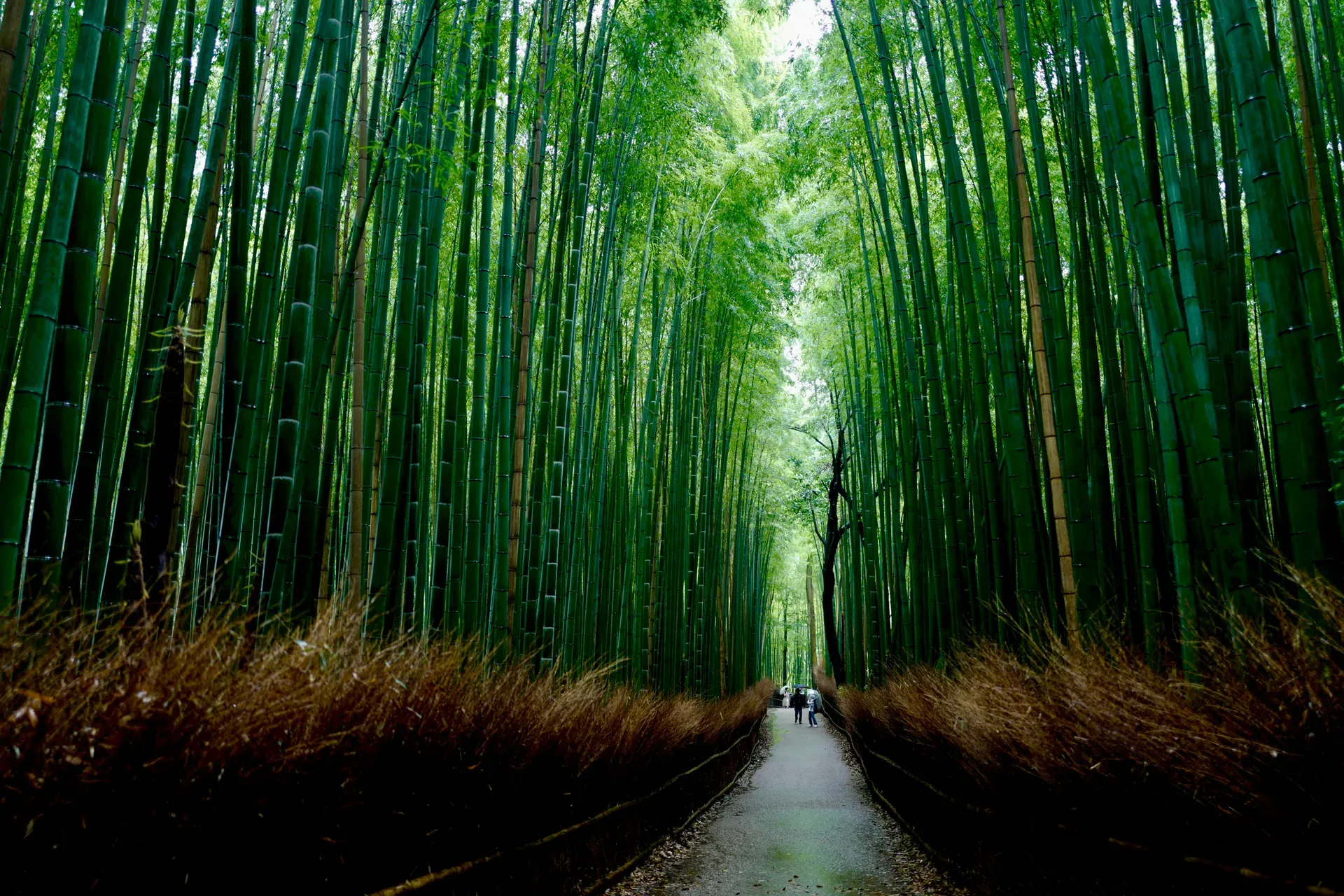
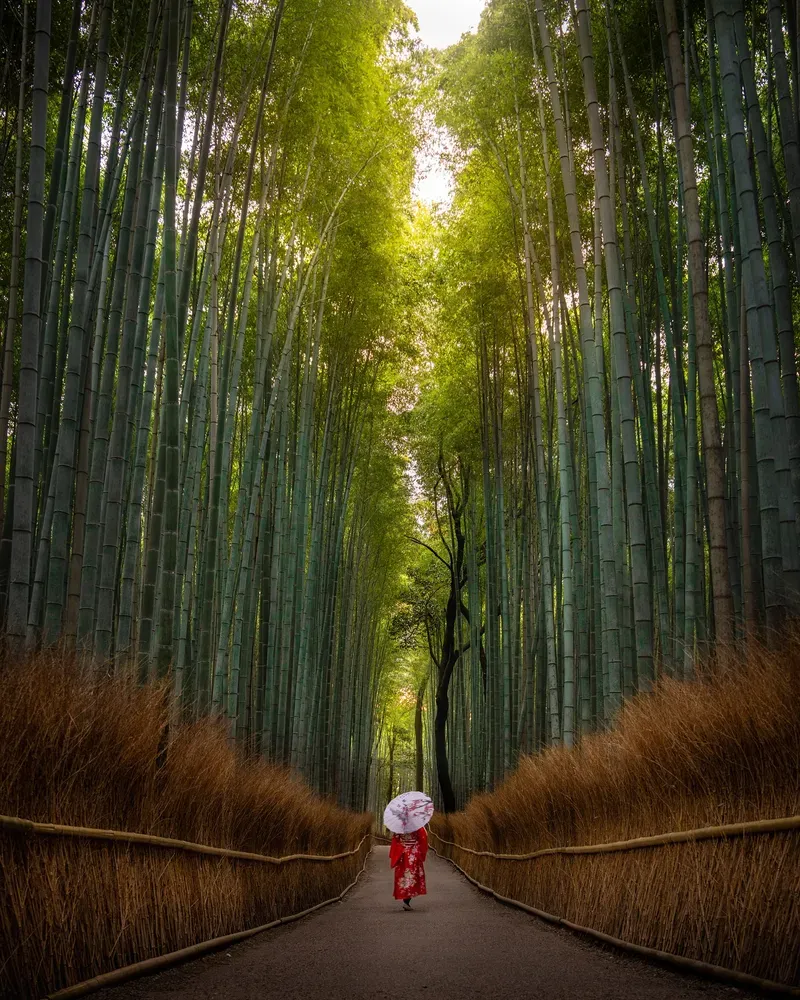
A 400-meter paved path winds through more than 10,000 Moso bamboo stalks, with green canopies reaching up to 30 meters high. As wind passes through the dense forest, it produces a distinct creaking and rustling recognized as one of the 100 Soundscapes of Japan.
Find Guided ToursLocated in the Ukyo Ward on the western outskirts of Kyoto, the Arashiyama Bamboo Grove is a natural forest of Moso bamboo at the base of the "Storm Mountains." The site centers around a 400-meter-long pedestrian path that cuts through a dense canopy of over 10,000 towering green stalks. These bamboo shoots reach heights of 10 to 30 meters, leaning inward to create a distinct tunnel effect that ranks among the most photographed landscapes in Japan.
Beyond its visual impact, the grove is recognized for its unique acoustic qualities. In 1996, Japan's Ministry of the Environment designated the forest as one of the "100 Soundscapes of Japan." As wind passes through the dense stalks, it produces distinct rustling and creaking sounds. Culturally, the forest serves as a preserved remnant of the traditional Sagano landscape, with bamboo symbolizing strength and prosperity in Japanese tradition.
The surrounding Arashiyama district has operated as a retreat for Japanese aristocrats since the Heian Period, which spanned from 794 to 1185. The grove itself was historically part of the expansive grounds of Tenryu-ji Temple. Shogun Ashikaga Takauji founded this temple in 1339, and today, visitors can still enter the forest directly through the temple's North Gate.
For centuries, the forest provided a steady source of materials for local bamboo crafts. As post-war urbanization threatened the remaining Sagano landscape, the government intervened. The forest was officially designated as a protected area in 1967, ensuring the preservation of this 16-square-kilometer district.
Discover the full history and cultural significance on our About page.
The Ministry of the Environment recognizes this forest as one of the 100 Soundscapes of Japan. Wind passing through more than 10,000 Moso bamboo stalks produces distinct rustling and creaking noises. Stand quietly along the 400-meter main path to hear this unique acoustic environment.
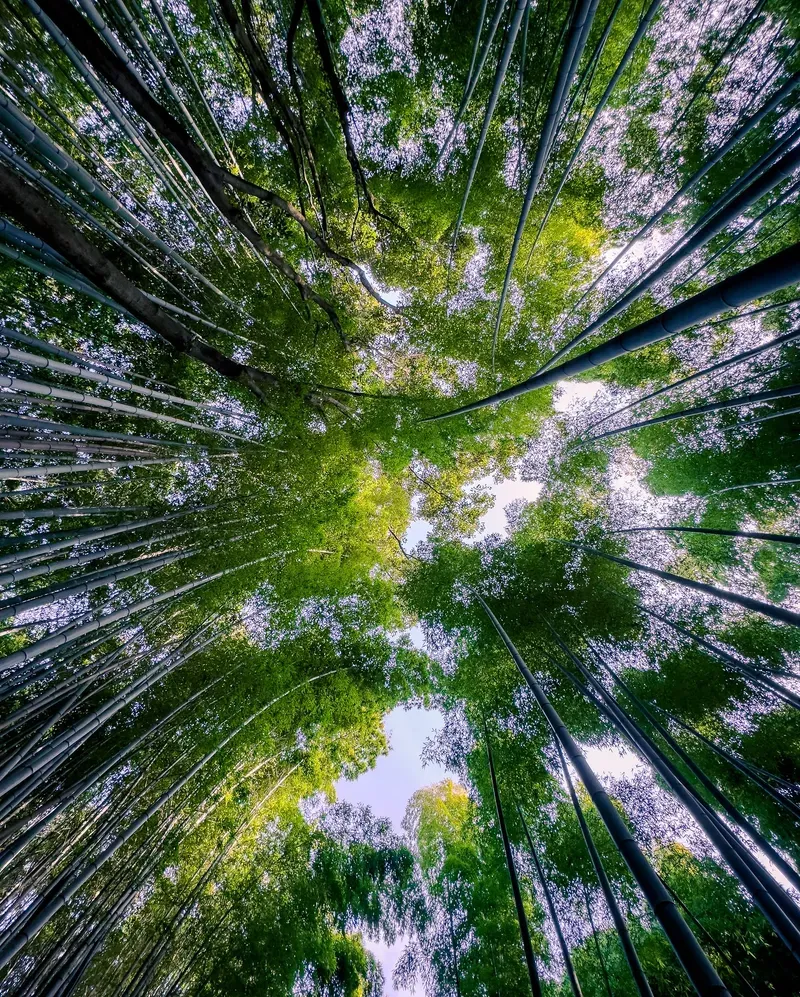
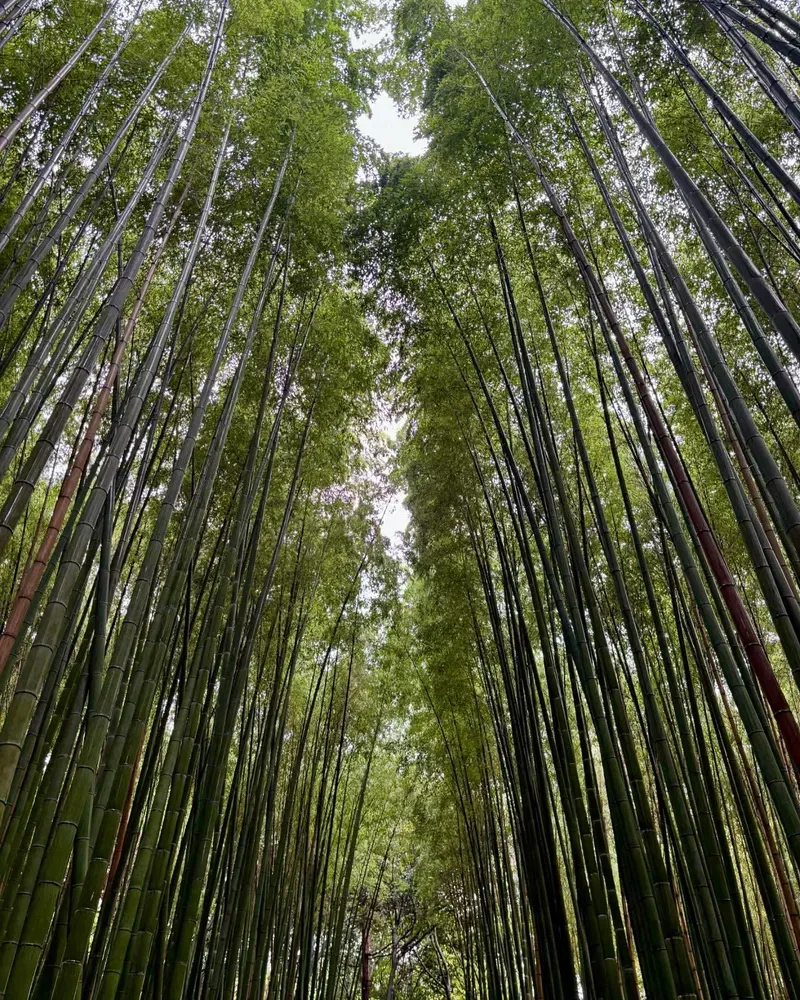
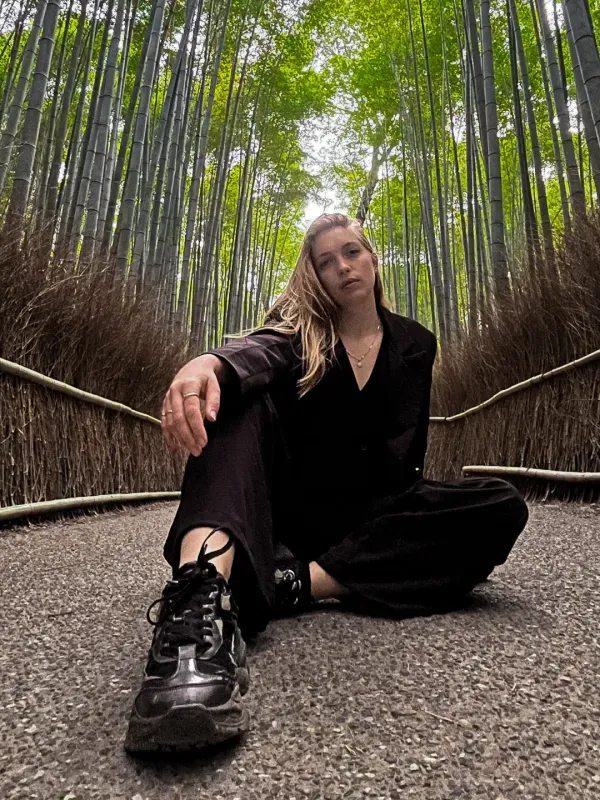
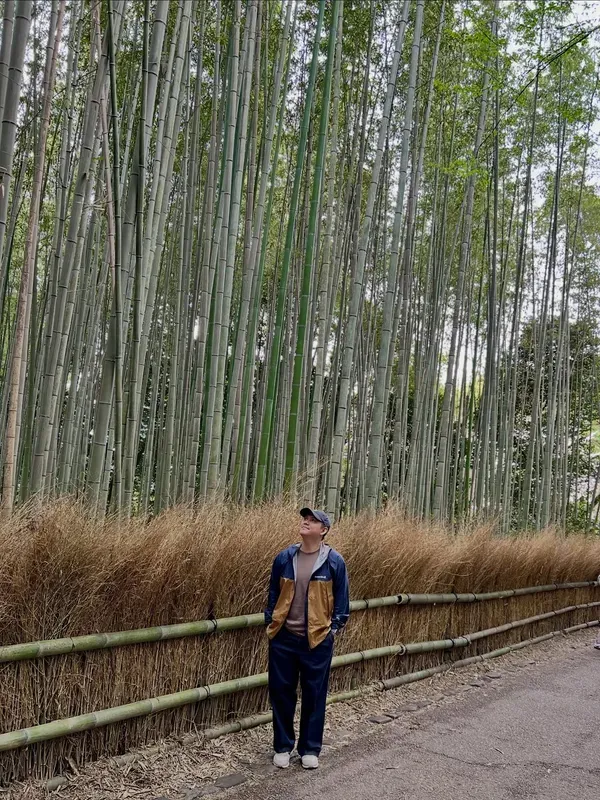
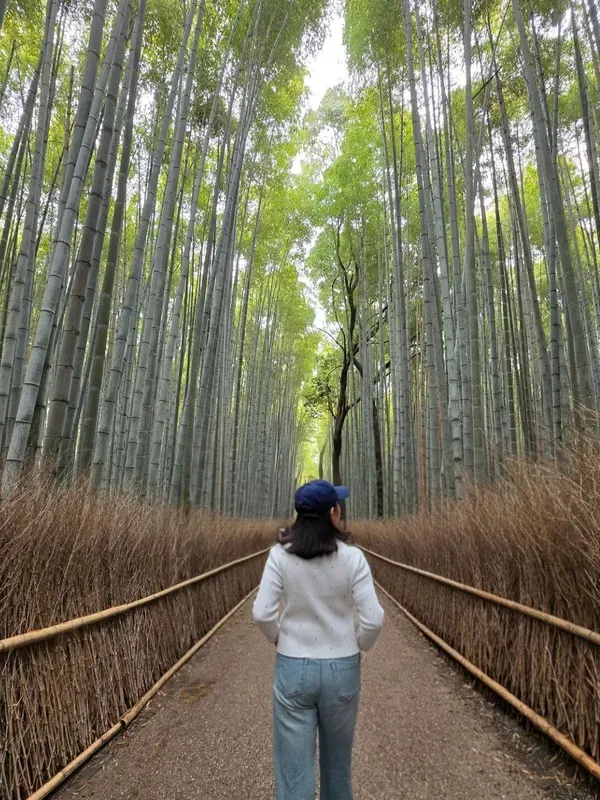
Thousands of stalks reaching heights of 10 to 30 meters lean inward over the central pedestrian path. Sunlight filters through the dense canopy above, creating dappled light patterns known as komorebi. This soaring natural architecture forms one of Japan's most photographed landscapes.
A small Shinto shrine sits directly within the forest boundaries. Nonomiya Shrine is notable for its rare black wood torii gate, which stands in stark contrast to the surrounding green stalks. It provides a quiet cultural stop during the 15 to 20-minute walk through the grove.
Local operators offer guided rickshaw rides that bypass the heavy foot traffic typically seen between 11:00 AM and 3:00 PM. These pulled carts travel along private paths inaccessible to general pedestrians. They provide an efficient way to navigate the gradual uphill slopes toward the western end.
Hand-picked tours with free cancellation and verified reviews
 Free Cancellation
  Free Cancellation
  Free Cancellation 10h 45min
  Free Cancellation
  Free Cancellation 5h
  Free Cancellation
  Free Cancellation 5h 30min
  Free Cancellation 4h 15min
 May and June offer the optimal conditions to view the striking green bamboo stalks. To bypass severe congestion, plan your 30 to 60-minute visit before 8:00 AM or after 6:00 PM.
Late March brings cherry blossoms and special nighttime illuminations. April suffers from extreme tourist congestion on the 140-meter-wide path, while May provides optimal green bamboo with fewer crowds.
June is an excellent month for deep green bamboo, especially on rainy days when crowds thin. August ranks as a worst month due to high humidity and mosquitoes requiring repellent.
Mid-to-late November highlights autumn foliage across the 16-square-kilometer district. However, November is heavily congested, and crowd surges on the narrow paths can make the area feel claustrophobic.
Winter avoids the extreme tourist surges of peak seasons. The grove remains completely dark after sunset, except during December when the Hanatoro festival provides rare nighttime illumination.
The Arashiyama Bamboo Grove is open 24 hours a day, every day of the year. There are no seasonal closures or restricted access times for the public pedestrian path. Because the forest is not regularly illuminated at night, walking through the grove after sunset is hazardous due to low visibility. The only exceptions are during special events like the Hanatoro festival in December or March, when the bamboo stalks are temporarily lit.
| Category | Price |
|---|---|
| General Admission | Free (0 JPY) |
No permits or advance bookings are required to walk the main 400-meter bamboo path. Separate admission fees and timed entry rules apply if you plan to visit adjacent properties, such as Tenryu-ji Temple or Okochi Sanso Villa.
For complete schedules and ticket prices, visit our Hours & Fees page.
The Arashiyama Bamboo Grove is situated 10.7 kilometers from Kyoto Station on the western outskirts of the city. Visitors can reach the site using several public transit networks or direct taxi services.
📍 Ukyo Ward, Kyoto
Departing from Kyoto Station, passengers should board the JR Sagano Line, which is also known as the San-in Line. The train covers the 10-kilometer distance efficiently. Riders will disembark at Saga-Arashiyama Station. From this transit hub, reaching the bamboo forest requires a straightforward 10-minute walk. This route is highly convenient for those starting their trip in central Kyoto.
Travelers can catch the Randen Tram starting from Shijo-Omiya Station. This route utilizes the Keifuku Arashiyama Main Line to traverse the 7.2-kilometer distance. Passengers should ride the tram until the final stop at Arashiyama Station. Once outside the station, the entrance to the main pedestrian path is merely a 5-minute walk away. The tram provides a direct link to the immediate vicinity.
Board Kyoto City Bus Route 28 directly from Kyoto Station for a surface-level transit option. The bus navigates an 11-kilometer route across the city. Passengers should alight at either the Arashiyama Tenryuji-mae or Nonomiya bus stop. While this method is the most economical, travel times depend heavily on local road conditions. Expect the ride to take nearly an hour.
For detailed transport options and routes, visit our Directions page.
Bypass the heavily congested main street by using the North Gate of Tenryu-ji Temple. This route allows a seamless transition from the 14th-century Zen gardens directly into the forest. Keep in mind that while the grove is free, the temple requires a separate entrance fee.
Arrive before 8:00 AM to avoid the peak tourist hours that run from 11:00 AM to 3:00 PM. Do not plan a late-night walk, as the 400-meter path lacks illumination and becomes hazardous after sunset. The grove is only lit during specific December and March festivals.
Heavy foot traffic makes using tripods and selfie sticks highly impractical. Local authorities also strictly prohibit drone flights without advance permits. For the best chances at an empty background, head toward the western end of the path near the Okochi Sanso Villa.
The bamboo grove does not have any public restrooms along its route. Use the facilities at your arrival train station before starting the 10 to 15-minute walk to the site. Alternatively, you can pay to use the restrooms inside the adjacent Tenryu-ji Temple.
The main pedestrian path is paved and generally accommodates wheelchairs. However, the terrain develops a steep uphill slope as it approaches the Okochi Sanso Villa. Manual wheelchair users may require assistance here, or visitors can hire local rickshaws to access exclusive private paths.
Bring insect repellent if you visit between June and August to protect against mosquitoes. High humidity peaks in August, making the 30 to 60-minute walk uncomfortable without proper preparation. Wear comfortable shoes, as the total walking distance from nearby train stations often exceeds two kilometers.
Founded in 1339 by Shogun Ashikaga Takauji, this UNESCO World Heritage site connects directly to the grove. Its focal point is a 14th-century Zen garden that has survived centuries of fires.
The former estate of a silent film star sits near a steep slope at the western end of the bamboo path. It offers panoramic views of Kyoto alongside inclusive matcha tea.
This park is home to over 120 wild Japanese macaques. It provides a high-altitude vantage point over the city, allowing visitors to observe the monkeys in an open environment.
Read what travelers share about their experience visiting Arashiyama Bamboo Grove — from practical tips to personal highlights.
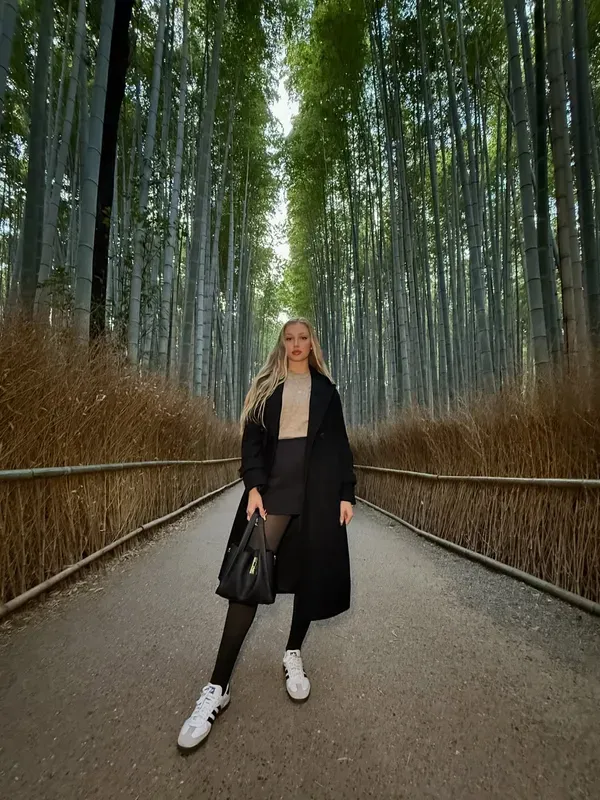
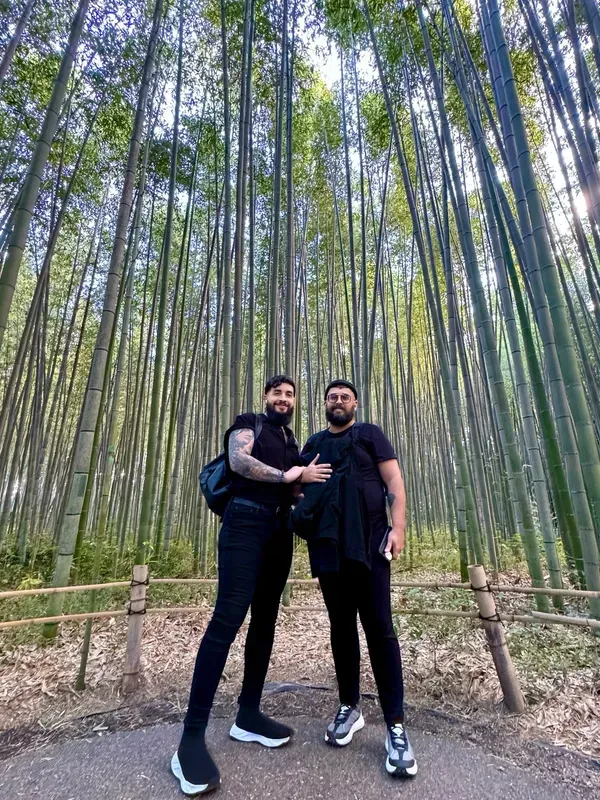
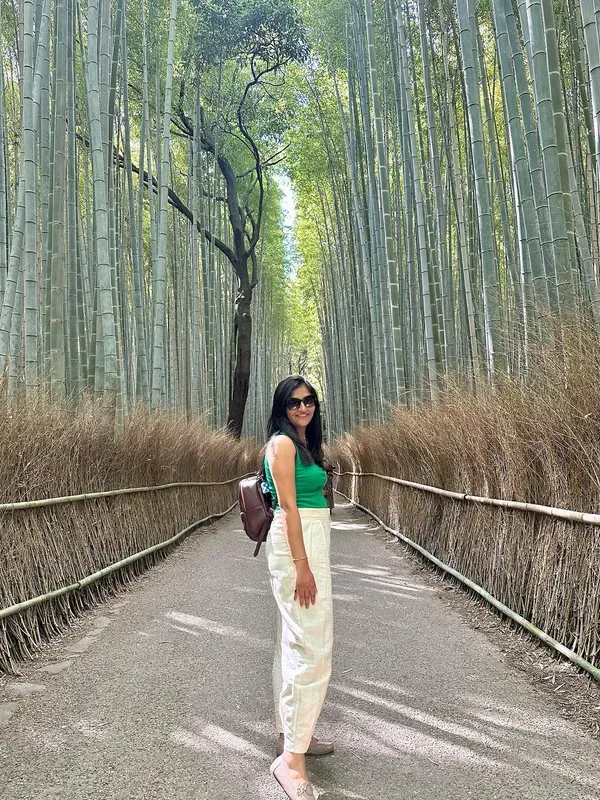
Entrance costs 0 JPY, and you do not need to book tickets or obtain permits for general entry. The grove is entirely free to visit. However, adjacent attractions like Tenryu-ji Temple require separate admission fees.
The Arashiyama Bamboo Grove is open 24 hours a day. The path is not illuminated at night, making walking after sunset hazardous due to low visibility.
Arrive before 8:00 AM or after 6:00 PM to avoid heavy tourist congestion. The peak hours run from 11:00 AM to 3:00 PM, during which the 400-meter path can feel claustrophobic.
The fastest route is the JR Sagano Line to Saga-Arashiyama Station, which takes 15 minutes and costs 240 JPY. From the station, it is a 10-minute walk to the grove entrance. Alternatively, taking a taxi directly costs around 4,200 JPY and takes 25 minutes.
Yes, the main path is paved and smooth, making it suitable for wheelchairs. The western end of the path slopes uphill toward the Okochi Sanso Villa, which may require assistance for manual wheelchair users.
There are no public restrooms within the grove itself. Use the facilities at the nearby train stations or inside Tenryu-ji Temple before starting your walk, as the average visit lasts 30 to 60 minutes.
Wear comfortable walking shoes, as the total walking distance from the station and through the forest can exceed 2 kilometers. If you plan to visit during the summer months of June through August, bring insect repellent to protect against mosquitoes.
Drones are strictly prohibited without a permit. Tripods and selfie sticks are highly impractical and often restricted due to heavy foot traffic along the main path. Commercial filming also requires advance permits from local authorities.
Browse verified tours with free cancellation and instant confirmation.
Find Tours